Personal Online Journal

Wednesday, February 20, 2019

Work with People you Disagree with

From an interview with the Arizona Republic:

Nelson adding that church members should spend more time working with people they disagree with instead of arguing with them. 
"'You don't have to hate your enemy,' he said. 'We would like to spend our time building bridges of cooperation rather than walls of separation.'" 
("As Long as We're Alive, We'll Be Changing": President Nelson Talks Church Changes, Immigration + More in Rare Interview, LDS Living, 19 Feb 2019 )
('Ours is a message of hope': LDS president, counselor talk immigration, youth, in Glendale interview, BrieAnna J Frank, Arizona Republic, 12 Feb 2019)
-


Sunday, February 17, 2019

The Prophesies of Adam and Eve

I love these prophesies of Adam and Eve
And in that day Adam blessed God and was filled, and began to prophesy concerning all the families of the earth, saying: Blessed be the name of God, for because of my transgression my eyes are opened, and in this life I shall have joy, and again in the flesh I shall see God. 
And Eve, his wife, heard all these things and was glad, saying: Were it not for our transgression we never should have had seed, and never should have known good and evil, and the joy of our redemption, and the eternal life which God giveth unto all the obedient.
(Moses 5:10-11)
-

Friday, February 15, 2019

Word are Inexhaustible Magic


Words are, in my not-so-humble opinion,
our most inexhaustible source of magic.
Capable of both inflicting injury, and remedying it.
J.K. Rowling, Harry Potter and the Deathly Hallows
(Harry Potter, #7)
What kind of magic do you practice?


Discipline


-
Discipline says, "I'll teach you how to do it right,"
While punishment says, "I'll make you regret doing it wrong"
- Leah Martin 
This reminds me of this quote

A large crowd followed the Savior as He ministered by the shore of the Sea of Galilee. So that more could hear Him, He got into Peter’s fishing boat and asked to be taken a little way out from the shore. After He had finished speaking, He told Peter, who had fished all night without success, to go out in the lake and let down his nets in the deep water. Peter obeyed, and he caught so many fish that the nets broke. Peter called to his partners, James and John, to come and help. All were amazed at the number of fish that were caught. Jesus said to Peter, “Fear not; from henceforth thou shalt catch men.” Luke then tells us, “When they had brought their ships to land, they forsook all, and followed him.”1 They became the Lord’s disciples. 
The word for disciple and the word for discipline both come from the same Latin root—discipulus, which means pupil. It emphasizes practice or exercise. Self-discipline and self-control are consistent and permanent characteristics of the followers of Jesus, as exemplified by Peter, James, and John, who indeed “forsook all, and followed him.” 
What is discipleship? It is primarily obedience to the Savior. Discipleship includes many things. It is chastity. It is tithing. It is family home evening. It is keeping all the commandments. It is forsaking anything that is not good for us. Everything in life has a price. Considering the Savior’s great promise for peace in this life and eternal life in the life to come, discipleship is a price worth paying. It is a price we cannot afford not to pay. By measure, the requirements of discipleship are much, much less than the promised blessings. ("Discipleship", James E. Faust, Oct 2006 General Conference)
-
- ("What Is Discipleship?", LDS Media Library)


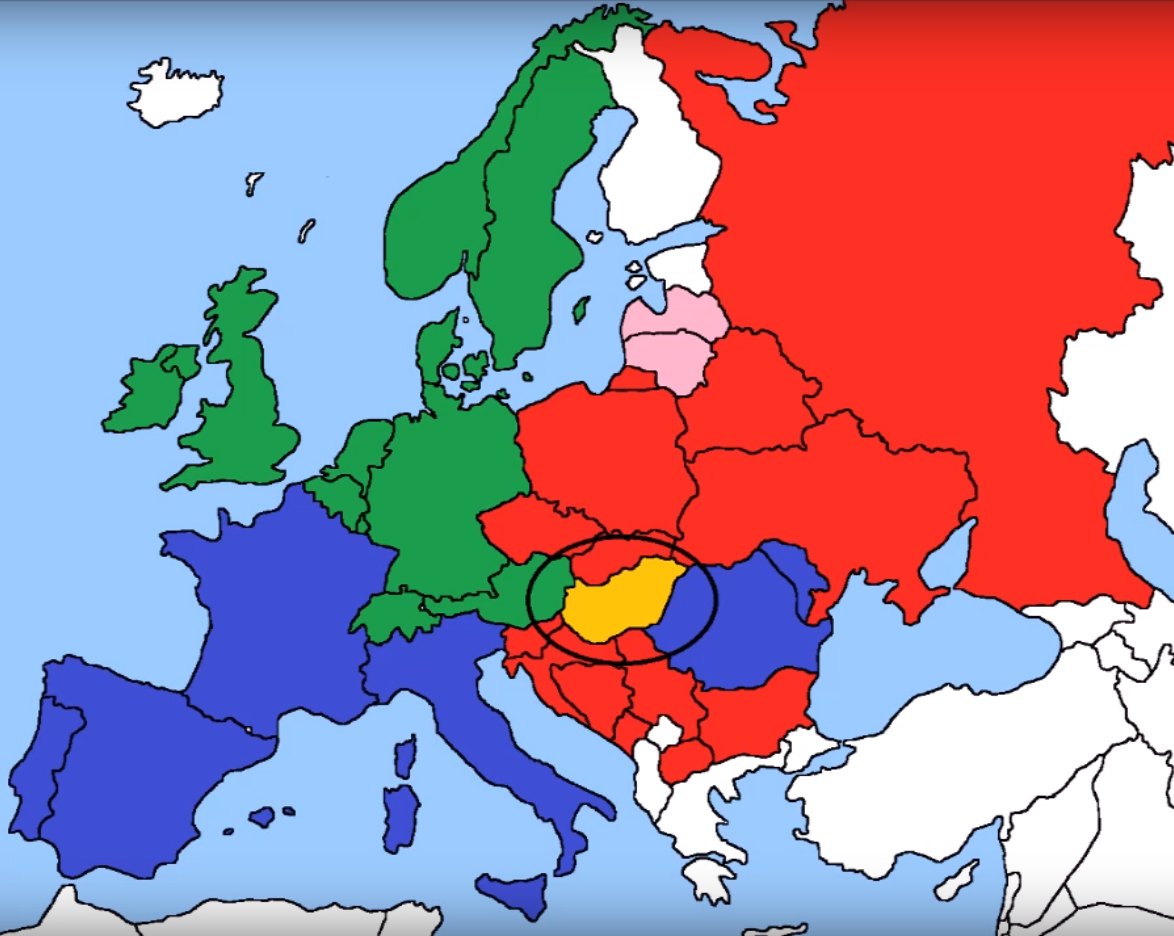
All Things Hungary


Hungarian is of a different language family that many other European languages.


(Screen shots from "The Uniqueness of Hungary", WhatsTheStory on YouTube)


Thursday, February 14, 2019

Keep All the Commandments

-

"Keep All the Commandments", LDS Media Library
Teach of faith to keep all the commandments of God, knowing that they are given to bless His children and bring them joy.4 Warn them that they will encounter people who pick which commandments they will keep and ignore others that they choose to break. I call this the cafeteria approach to obedience. This practice of picking and choosing will not work. It will lead to misery. To prepare to meet God, one keeps all of His commandments. It takes faith to obey them, and keeping His commandments will strengthen that faith. ("Face the Future with Faith", Russell M. Nelson, Apr 2011 General Conference)


Tuesday, February 12, 2019

Disciplinary Councils

-

President Hinckley teaches about disciplinary Councils (D&C 102:9-33)
In times of disciplinary councils, the three brethren of the bishopric, or the three brethren of the stake presidency, or the three brethren of the presidency of the Church, sit together, discuss matters together, pray together, in the process of reaching a decision. I wish to assure you, my brethren, that I think there is never a judgment rendered until after prayer has been had. Action against a member is too serious a matter to result from the judgment of men alone, and particularly of one man alone. There must be the guidance of the Spirit, earnestly sought for and then followed, if there is to be justice. (“In … Counsellors There Is Safety”, Gordon B. Hinckley, GC, Oct 1990)

From “Lesson 107: Doctrine and Covenants 102,” Doctrine and Covenants and Church History Seminary Teacher Manual (2013) President Harold B. Lee tells the following account:

“Some years ago … I served as a stake president. We had a very grievous case that had to come before the high council and the stake presidency that resulted in the excommunication of a man who had harmed a lovely young girl. After a nearly all-night session that resulted in that action, I went to my office rather weary the next morning and was confronted by a brother of this man whom we [met with in council] the night before. This man said, ‘I want to tell you that my brother wasn’t guilty of what you charged him with.’ 
“‘How do you know he wasn’t guilty?’ I asked. 
“‘Because I prayed, and the Lord told me he was innocent,’ the man answered” (Teachings of Harold B. Lee, ed. Clyde J. Williams [1996], 420–21).
President Lee continued the account:

 “I asked him to come into the office and we sat down, and I asked, ‘Would you mind if I ask you a few personal questions?’ 
“He said, ‘Certainly not.’ … 
“‘How old are you?’ 
“‘Forty-seven.’ 
“‘What priesthood do you hold?’ 
“He said he thought he was a teacher. 
“‘Do you keep the Word of Wisdom?’ 
“‘Well, no.’ … 
“‘Do you pay your tithing?’ 
“He said, ‘No’—and he didn’t intend to as long as that … man was the bishop of the Thirty-Second Ward. 
“I said, ‘Do you attend your priesthood meetings?’ 
“He replied, ‘No, sir!’ … 
“‘You don’t attend your sacrament meetings either?’ 
“‘No, sir.’ 
“‘Do you have your family prayers?’ and he said no. 
“‘Do you study the scriptures?’ He said well, his eyes were bad, and he couldn’t read very much. … 
“‘Now, then,’ I said, ‘fifteen of the best-living men in the Pioneer Stake prayed last night. … and every man was united. … Now you, who do none of these things, you say you prayed and got an opposite answer. How would you explain that?’ 
“Then this man gave an answer that I think was a classic. He said, ‘Well, President Lee, I think I must have gotten my answer from the wrong source’” (Teachings of Harold B. Lee, 421–22).

-


Tuesday, February 05, 2019

Sacrifice: give up something good for something of far greater worth

-
An acceptable sacrifice is when we give up something good for something of far greater worth. 
Giving up a little sleep to help a child who is having a nightmare is a good sacrifice. We all know this. Staying up all night, jeopardizing our own health, to make the perfect accessory for a daughter’s Sunday outfit may not be such a good sacrifice. 
Dedicating some of our time to studying the scriptures or preparing to teach a lesson is a good sacrifice. Spending many hours stitching the title of the lesson into homemade pot holders for each member of your class perhaps may not be. 
Every person and situation is different, and a good sacrifice in one instance might be a foolish sacrifice in another. 
How can we tell the difference for our own situation? We can ask ourselves, “Am I committing my time and energies to the things that matter most?” There are so many good things to do, but we can’t do all of them. Our Heavenly Father is most pleased when we sacrifice something good for something far greater with an eternal perspective. Sometimes, that may even mean nurturing small but beautiful forget-me-not flowers instead of a large garden of exotic blooms. ("Forget Me Not", Dieter F. Uchtdorf, Oct 2011, Timestamp 5:45, https://youtu.be/6mplF_y-7O8?t=345
-


Friday, February 01, 2019

A Savior to Fall in Love With

or "Shepherding Hearts" or "Ministering to Souls"

From "Episode 5: From Prepare Ye the Way of the Lord" of the Come Follow Me for Us podcast.

When they are all alone, when they are feeling sad, they can remember our words. Maybe we can remember the words of the scriptures when we are feeling low. That the power and strength (grace) of Jesus is available to us. We can draw on His power.

"For the Love" By Jen Hatmaker

A kid that Melanie knows said, "Jesus doesn't love us all the time...Well, guess if you repent, he does." Melanie said, "What have we (inadvertently) done? ... Maybe we push the rules too hard and not enough about how the Savior love them." From "For the Love" By Jen Hatmaker:
If they don't love Jesus and people, it matters zero if they remain virgins and don't say the f-word, we must shepherd their hearts and not just their hemlines. 
Do we say "You are bad" or "Jesus is amazing"? Jen Hatmaker continues:
Jesus operates beyond the tidy boundaries of good behavior. Rather than simply enforce his rules, we should show our kids His kingdom. That's where they will discover a Savior to fall in love with. 
I love this message. We must do all we can to encourage them (and ourselves) to learn about Jesus and know him.  Show them the Savior, His kingdom. Let them fall in love with him. 

This reminds me of Nephi, he said:
having great desires to know of the mysteries of God, wherefore, I did cry unto the Lord; and behold he did visit me, and did soften my heart that I did believe all the words which had been spoken by my father (1 Nephi 2:16)
He asked God to soften his heart. We must act as agents.
"the power of the Spirit carries the message unto but not necessarily into the heart. A teacher can explain, demonstrate, persuade, and testify, and do so with great spiritual power and effectiveness. Ultimately, however, the content of a message and the witness of the Holy Ghost penetrate into the heart only if a receiver allows them to enter." (“Seek Learning by Faith,” David A Bednar, Ensign, Sept. 2007)
-