Occam’s razor "the simplest explanation is usually the right one"
https://en.wikipedia.org/wiki/Occam%27s_razor
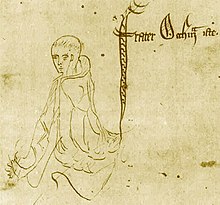
Occam’s razor "the simplest explanation is usually the right one"
https://en.wikipedia.org/wiki/Occam%27s_razor
-
I have come to understand how useless it is to dwell on the whys, what ifs, and if onlys for which there likely will be given no answers in mortality. To receive the Lord’s comfort, we must exercise faith. The questions Why me? Why our family? Why now? are usually unanswerable questions. These questions detract from our spirituality and can destroy our faith. We need to spend our time and energy building our faith by turning to the Lord and asking for strength to overcome the pains and trials of this world and to endure to the end for greater understanding.
What a wonderful I quote I found in "Come Follow Me Insights (Doctrine and Covenants 37-40, Apr 12-18) at 31:10", https://youtu.be/9U9fQURv8EE?t=1870
It is from Robert D. Hales, "Healing Soul and Body" Oct 1998.
Also from this episode is this quote from Richard G. Scott from "Trust in the Lord", Oct 1995
It really does no good to ask questions that reflect opposition to the will of God. Rather ask, What am I to do? What am I to learn from this experience? What am I to change? Whom am I to help? How can I remember my many blessings in times of trial?
There are several stories from Ken Alford
Personal applications of principles when going through...
"Ken, with out being too personal .. how did it affect your personal identity and who you are?"
- Leukemia in the family
- Other family challenges
"Heavenly Father can comfort infinitely. He knows the end from the beginning. We don't know how some of these stories are going to turn out yet, but it's going to be OK."
-

I have known Melanie Wellman Stroud for well over 15 years. I remember attending a ward or stake fireside back when I first knew her. It was about how she studies the Book of Mormon. It inspired me.
She has since had a roller coaster of experiences. She has been hosting a podcast called Come Follow Me for Us since January 2019. One of her perennial topics is how we all need to study The Book of Mormon every day.
For many years now, I have had the goal of reading or listening The Book of Mormon every day. For the last six months I have been reading or listening to The Book of Mormon for least 15 minutes every day.
I don't know if I can say too much about what is does for me. It has been an anchor to me when many others had slipped away. It roots me to Jesus Christ who is my only hope. It has chided me in many ways. It has been a way for me to know that I have been having revelation.
I love The Book of Mormon. It verifies the truth of the Bible. I know that as I live by its teachings, I will overcome the world through my Savior Jesus.
Here is Melanie's podcast on the Book of Mormon.
https://comefollowmeforus.com/bomstudy/
Here are links to how to get it as a podcast.
Spotify - https://open.spotify.com/show/3vCK5Xkn8WnybenySfrHv7?si=qTwLmQEsQASTXJF7fRUK8w
Apple - https://podcasts.apple.com/us/podcast/come-follow-me-for-us-podcast/id1448229352
Here is a Google Doc that has some key quotes and promises and how Melanie was taught to study The Book of Mormon by her mission president. "The Book of Mormon: The Liahona of our Lives"
https://docs.google.com/document/d/1CFDrfwTnmbqGEuprDR0u1IpUxIWSMo3xfOxgPDkElw4/edit?usp=sharing
Melanie Wellman Stroud
From a FB Post, 11 Apr 2021
I am listening to episode 5 of "The First Vision: A Joseph Smith Papers Podcast. Eight minutes in, a professor Steven C. Harper of BYU talks about the nature of memory and why there were different accounts of Joseph Smith's first vision.

8:23 - 12:45 question "Why are there different accounts?"
Following is a selection of the transcription of “It Caused Me Serious Reflection” (The First Vision Podcast, Episode 5) from 8:25 - 12:45 in the audio that answers the question "Why are there different accounts?"
The four gospels of the new testament.
The way memory works. A present production of the shards of the past.
We view the past through the lens of the present.
From the transcription:
Spencer: All this talk of record keeping brings us to a question that many Latter-day Saints have asked about Joseph Smith’s first vision. Why are there different accounts?
The answer: there are different accounts of the First Vision because Joseph Smith described the event to different audiences at different times. Naturally, the different accounts vary in emphasis and detail because each was told in a different context. Nevertheless, the various accounts tell a consistent story.
Now, historians expect differences in the accounts of historical events if they were created at different times and under different circumstances. In fact, such differences in detail and emphasis often help historians and other scholars piece together a fuller story.
For instance, think of the accounts of Jesus’s life and His resurrection in the Bible—the four gospels. There are four different accounts told in different contexts that emphasize different details. Scholars of the Bible and early Christianity do not reject the accounts because of the differences but instead understand the different accounts as a benefit to their scholarship.
So, the different accounts of the First Vision can be studied in a similar way. And they not only help us better understand the vision itself. The different accounts help us better understand Joseph Smith’s life and the early history of the church he led. As Steven Harper explains, this has a lot to do with the way that memory works, that in addition to Joseph relating the vision at different times to different audiences, the various accounts are also formed by the nature of memory itself.
Steve: So, the answer to why these different accounts to me lies in the science and the psychology of memory. Memory is not what we often assume it is. Memory is not a recording of our past that’s like this podcast recording. We could replay it ten years from now, and it’ll sound the same. It’ll be the exact same recording, no matter how many times you play it or how distant in time we play it. That is not how memories work, not at all.
A memory is a present production that is made from a combination of cues that are stored somewhere in our minds somehow. Nobody knows for sure how, but “traces” of the past, as Daniel Schacter at Harvard calls them. “Traces” is his word.
So, it’s the past or pieces of the past—you might think about it as shards of the past—and present. The present environment in which we are remembering has a lot to do with the shape that memory will take.
Spencer: What Steve is describing is really interesting to me. As I understand it, what is happening in the present influences the way we remember events in the past. Our circumstances in a given moment also influence what aspects of those events we choose to emphasize. When we are talking about memory, context matters. And it matters a lot.
In other words, we view the past through the lens of the present. That’s how our memories work.
So, how does this influence the way that Joseph Smith remembered and retold the First Vision at different times?
Steve: So, what is happening in Joseph’s present to cue the memory in the first place, and then help him recover some of the shards or traces he has at his disposal, and put them together in the particular way he does at the time—that’s the way to get at the differences in the accounts.
Spencer: If we want to understand the differences in the accounts of the First Vision and uncover new and deeper meaning from Joseph Smith’s experiences, then we need to ask what was happening in Joseph Smith’s life at the moments in which he recounted the First Vision. In short, to move beyond the question of why there are different accounts of the First Vision to the question of what insights can we gain from studying the different accounts, we need to look at what cues informed the way Joseph remembered and told audiences about the event.
A link to the other episodes of "The First Vision: A Joseph Smith Papers Podcast"
Scriptures that use the phrase "one eternal round"
"I perceive that it has been made known unto you, by the testimony of his word, that he cannot walk in crooked paths; neither doth he vary from that which he hath said; neither hath he a shadow of turning from the right to the left, or from that which is right to that which is wrong; therefore, his course is one eternal round." (Alma 7:20)
"And it may suffice if I only say [The Book of Mormon records] are preserved for a wise purpose, which purpose is known unto God; for he doth counsel in wisdom over all his works, and his paths are straight, and his course is one eternal round." (Alma 37:12)
"For he that diligently seeketh shall find; and the mysteries of God shall be unfolded unto them, by the power of the Holy Ghost, as well in these times as in times of old, and as well in times of old as in times to come; wherefore, the course of the Lord is one eternal round." (1 Nephi 10:19)
"For God doth not walk in crooked paths, neither doth he turn to the right hand nor to the left, neither doth he vary from that which he hath said, therefore his paths are straight, and his course is one eternal round." (D&C 3:2)
"Listen to the voice of the Lord your God, even Alpha and Omega, the beginning and the end, whose course is one eternal round, the same today as yesterday, and forever." (D&C 35:1)
--
I also found this YouTube video by Greg Matsen who is "the founder of Cwic Media" and "has a strange passion for ancient history & religion." He talked about how the round is a symbol of the higher law and some of the ancient history of circles. Also how it related to the square and the lower law.
--
In addition, I found this from Scott R. Braithwaite, assistant professor of psychology at BYU, BYU Campus Education Week Sep 2014. "Deliberate practice is so intense you can only do it for one to four hours a day. It also involves seeking critical feedback targeted at improvement from an unbiased mentor." ("Improvement and Progression: One Eternal Round")
A study of students at the Academy of Music in Berlin was set up to determine what separated the best students from the average students. All of the students were extremely talented. “The key was not how many hours were spent in total because they all spent the same amount of time,” said Brother Braithwaite. “The key was how they spent their time. Elite performers spent 3.5 hours practicing alone and the lowest skilled musicians spent 1.5 hours.” The best students also worked in two defined periods at a deep level and took a nap and rested in between periods. The worst students were busy all day, never rested and never got intense, deliberate practice.
-
"I define vulnerability as uncertainty, risk, and emotional exposure." (Brené Brown, Daring Greatly, p 34)
I am having an issue with how Brené Brown uses worthy and how my church uses it. “Am I worthy to have a temple recommend” does not jive with Brené’s definition. She might use “Am I recommended to have a temple recommend” Following use words different than worthy in a Latter-day context.
- Can I answer all the temple recommend questions affirmatively?
- Am I congruent with the temple recommend questions?
- Am I aligned with the temple recommend questions?
- Am I straight with respect to the temple recommend questions?
- Am I loyal to the temple recommend questions?
- Am I to be trusted that I live the gospel to the extent that I can attend the temple?
- Am I living the gospel to the extent that I can attend the temple?
In contrast, in a Latter-day context what Brené Brown defines as worthiness is closer to being of worth or being deserving or being of value. This song shows our belief of individual worth. "I am of infinite worth" Janice Kapp Perry & Joy Saunders Lundberg, I Walk By Faith (2010)
“if we are continuously repenting and improving, then we are worthy to partake of the sacrament.” (“The Beauty and Importance of the Sacrament,” General Conference, April 1989).
What is the difference between being worthy and having a sense of my individual worth?
“Let me point out the need to differentiate between two critical words: worth and worthiness. They are not the same. Spiritual worth means to value ourselves the way Heavenly Father values us, not as the world values us. Our worth was determined before we ever came to this earth. “God’s love is infinite and it will endure forever.”3
On the other hand, worthiness is achieved through obedience. If we sin, we are less worthy, but we are never worth less! We continue to repent and strive to be like Jesus with our worth intact. As President Brigham Young taught: “The least, the most inferior spirit now upon the earth … is worth worlds.”4 No matter what, we always have worth in the eyes of our Heavenly Father.” ("Value beyond Measure", Joy D. Jones, Oct 2017)
Instead of asking “Am I worthy?”, ask “Am I of worth?”
Come Follow Me for Us
Melanie Stroud is the host of Come Follow Me for Us. Here is the Book of Mormon Daily Study program. Here is the link to the podcast.
Spotify - https://open.spotify.com/show/3vCK5Xkn8WnybenySfrHv7?si=qTwLmQEsQASTXJF7fRUK8w
Apple - https://podcasts.apple.com/us/podcast/come-follow-me-for-us-podcast/id1448229352
Come Follow Me Insights
Here is the YouTube list for Doctrine & Covenants.
https://www.youtube.com/playlist?list=PLhfh21X9suLfDM0oD8LbEDjFKiKd_Cu_T
One of the hosts is Tyler J. Griffin. He is an Ancient Scripture professor at BYU.
Another is Taylor Halverson. He is an Associate Teaching Professor of Entrepreneurship in the BYU Marriott School of Business
I found this account moving. I did not know that Joseph F. Smith struggled with substance addictions. It is an inspiring story of hope, grace, accountability, overcoming shame, and the redemption of God. It is copied from a post from the Faith Forward Facebook page. She listed the following as her sources.
“Chapter 6: Joseph F. Smith: Sixth President of the Church,” Presidents of the Church Student Manual (2004), 93–109
"Before The Beard: Trials of the Young Joseph F. Smith", By Scott G. Kenney, Sunstone Magazine, Nov 2001, 20-43
When he was a infant intruders broke into his home. They threw a mattress over him while they ransacked the place and he nearly suffocated.
He was still a baby when his family was forced from their homes. His mother was sick, his father in jail, and his aunt cared for him.
He was five when his mother lifted him to see his father's body, a cotton ball placed where a bullet had entered his father's face. Then whenever he saw strangers in the street he would hide, thinking they'd take him next.
Seven when he looked back across a frozen river to what had been his home and heard cannon fire, the beginning of another forced exodus.
Thirteen when his mother died after an eight week quarantine. When he was told he passed out. She had held him together, kept him in check, and now he said, "I was almost like a comet or a fiery meteor without attraction or gravitation to keep me balanced or guide me within reasonable bounds."
He fell into bad company. Maybe he was the bad company. Drinking and tobacco.
He loved his family. He lost his family. He had a sister left. The schoolmaster called her up on some infraction, had a leather strap. He cried out, "Don't you touch her with that!" The teacher invited him up to take the punishment in her place. Instead he strode to the front and decked the teacher. As I told this story to a group of teens they cheered. I told them no, we all get it. He lost so much of what he loved, but what he did was inappropriate. He let it get him. He hugely overreacted to what was then culturally acceptable.
He was expelled from school.
Fifteen when he was called to serve a mission to the Sandwich Islands. Some speculate it was because no one knew what to do with him; fiery, passionate, and broken. Oh, but the Lord knew. No one forced him to go, but he went. The teacher was there to wish him well.
The Sandwich Islands where he was placed was then a place of poverty and disease. STDs, Small Pox, and others. It was humbling. He threw himself to work. He learned the language quickly and after six months became the lead over some 1200 church members in forty-one branches. He loathed the living conditions. Loved the people and hated their vices. Sixteen years old. Determined.
The addictions acquired hadn't yet left him. They don't leave, do they? Addictions don't walk out.
He and all other missionaries were called home to Utah due to rumors of an impending military invasion. He enrolled in the militia. The forseen war fortunately petered out.
There, though he "went into the president’s office. He whispered to me, I was obliged to whisper back. He smelt my breath, and started in surprise. “Do you
chew tobacco?” I could have shrunk out of existence, or anihilated myself from very shame, and he saw I was ashamed of myself, and pitying me said, "Keep it to yourself”!"
He hated the hypocrisy he saw in himself. He hated himself. He determined to quit. The alcohol was easy as it never had much hold on him, but the tobacco took twenty years. Nicotine is more addictive. Many substance abuse centers put it in the top five most addictive substances. It held him. He hated it. He tried and failed, tried again. Withdrawals made him,"cross and crabbed", more apt to be harsh with his wife and children. He succumbed. And tried again.
Twenty years. Twenty years and then, "I conquered—and now, when I think of it, I feel ashamed that I was so weak, and strange to say the appetite, though still with me and perhaps as strong as ever, it is at my command. It is no longer the master, but a subdued, conquered enemy ever on the alert to revolt, but daily
growing weaker and more faint."
He urged others to conquer. He spoke harshly of addictions, praised clean living, put himself up as a standard and enjoined others to try. He did so with empathy. And when, as president of the church, he charged the people to give up their addictions as a prerequisite to temple attendance, he told the bishops that if there were those elderly and set in their ways for whom the new enforcement was difficult that they still ought to allow them their temple worship. He was determined and passionate. Fiery, but kind. His youthful wildness yolked to keen understandings and a determination to do justly, to lead as God would have him do, made him formidable: a champion for good.
I told this story to a room full of teens. About the broken boy whose temper raged, who self medicated his grief with addiction, and how he became a worthy, powerful leader. And after I wondered if it were right to show these struggles in a man we revere, and the member of the bishopric I lamented to said, "Well yes, of course! Of course you tell them. Our is a gospel of redemption!"
Redemption. The boy was redeemed. Brought back. Cleansed. Loved, held, blessed, healed- by God. By Jesus. And he became a leader for Christ.
As the president of the church he was attacked and vilified. His character was maligned. For a six year period one newspaper almost daily cartooned him as wicked. "He endured persecution, the revilings and ravings of the wicked, false accusations coming from the most contemptible and vilest creatures of the human family, and endured it all without a word of retaliation. … He took the stand that if Joseph Smith could endure the abuse and vilification which was heaped upon him; if the Son of God could endure it and not return in kind, then he, too, as the humble servant of the Master, could endure in silence, for his fear was not in the arm of flesh but in the Lord, and the time must come when truth would triumph and the falsifier would sink into oblivion and be forgotten.” The boy who decked his school teacher now turned the other cheek. He insisted on forgiveness.
There is more. So much more. He testified before congress in such a way the detractors became defenders. The church, considered extreme, became more mainstream.
He was compassionate. He led the church during World War I. He encouraged patriotism, supported soldiers, and urged those at home to practice thrift.
Section 138 of the Doctrine and Covenants was a revelation given by God to him. It teaches about heaven.
He was Joseph F Smith, son of Hyrum Smith, nephew to the first modern prophet Joseph Smith, and I think he was magnificent. The more I learn the more I respect him. I think that for me, seeing the struggles makes me admire him more, not less. It makes him relatable. It gives me a glimpse of how God molds people. Troubled teen to Prophet. Self-loathing addict to advocate for Christ.
How do I treat people who are trapped? I, who never struggled a day with addictions, have a lot to thank my ancestors for. They broke the chains. I grew up with no alcohol, no addictive substances, in my home. Never saw them there. Was taught not to touch them anywhere. It an easy commandment for me. How do I treat those for whom it's hard? Do I consider myself superior for never having struggled? If I do, I'm wrong to. It was never hard for me, but I owe that to those for whom it was. Children of addicts are far more likely to develop addictions. It is often a familial disease. I owe a lot to the chain breakers. Struggled and conquered so I never had to. That's a beautiful gift.
-


